-->
Showing posts with label Internet Freedom. Show all posts

Thursday, February 23, 2012

Document Proves DHS is Monitoring Social Media for Government Criticism

Source: Prison Planet
Paul Joseph Watson

Keywords agency is tracking include “body scanner,” “nationalist” , “police,” and “immigration”

A Homeland Security training manual belies claims made by DHS representatives during a Congressional hearing last week that the federal agency is only monitoring social media outlets for “situational awareness,” and proves the fact that Big Sis is also tracking online criticism of government, including discussion of airport body scanners.

“Analysts for a Department of Homeland Security program that monitors social networks like Twitter and Facebook have been instructed to produce reports on policy debates related to the department, a newly disclosed manual shows,” reports the New York Times.

The manual, entitled Department of Homeland Security National Operations Center Media Monitoring Capability Desktop Reference Binder, was obtained by the Electronic Privacy Information Center via a FOIA request.

The controversy over DHS spying on social media erupted last month following the release of 300 documents which detailed how DHS had hired an outside contractor, General Dynamics Advanced Information Systems, to monitor social media outlets along with a list of websites, on a “24/7/365 basis,” in order to uncover “any media reports that reflect adversely on the U.S. Government and the Department of Homeland Security.”

During a subsequent Congressional hearing on the matter, DHS representatives Mary Callahan and Richard Chávez denied the fact that tracking criticism of government agencies formed any part of the program, and that the effort was merely aimed at developing “situational awareness” of potential threats, mostly related to extreme weather events.

However, the 2011 manual makes it abundantly clear that the program was a backdoor effort to keep tabs on what the American people were saying about not just the DHS, but a whole host of federal agencies, including the CIA, the ATF, the TSA, FEMA, as well as organizations outside of the U.S. government such as the United Nations and the Red Cross.

Top Social Media Websites Caught Censoring Controversial Content

Source: Washington's Blog

Censorship By Top Social Media Websites

Facebook pays low-wage foreign workers to delete certain content based upon a censorship list. For example, Facebook deletes accounts created by Palestinian resistance groups.

Digg was caught censoring stories which were controversial or too critical of the government. See this and this.

Now, even social media site Reddit – which helped launch the anti-Sopa Internet blackout and publicize GoDaddy’s slimy Sopa support – is doing the same thing.

As just one example, posts from this website are being censored by Reddit. Specifically, a friend of this site who has submitted stories to Reddit has received the following messages of rejection from a Reddit moderator named davidreiss666:
from davidreiss666 via /r/worldnews/
WashingtonBlog is not something we consider a good source for r/Worldnews. From davidreiss666 via /r/worldnews/
Please submit that story from an alternate domain. Thank you.
And another moderator named Maxion:
from Maxion via /r/worldnews/
I am sorry but this submission is not appropriate for this subreddit.
There are certainly also more open-minded moderators at Reddit. But a couple of censors can squash discussion on entire topics.

Why Are They Censoring?

Why are they censoring?

Well, censorship is rampant in America … and social media has grown so big that it has become a target as well.

In addition, as I pointed out last year [for ease of reading, we'll skip indentation]:
Wired reported on Friday:
The Pentagon is looking to build a tool to sniff out social media propaganda campaigns and spit some counter-spin right back at it.

Tuesday, February 21, 2012

Scary NSA Propaganda: Anonymous Cyberattack Will Take Down Power Grid

Source: Infowars
Kurt Nimmo

An article for Wall Street Journal subscribers reveals that NSA boss Gen. Keith Alexander believes the hacktavist collective Anonymous may soon have the capability to take down the power grid in the United States through a cyberattack.

Alexander has peddled his theory at White House meetings and in other private sessions, according to people familiar with the gatherings, WSJ reports. “While he hasn’t publicly expressed his concerns about the potential for Anonymous to disrupt power supplies, he has warned publicly about an emerging ability by cyberattackers to disable or even damage computer networks,” writes Siobhan Gorman.

It’s not easy to disrupt the power grid in the United States. Most systems use proprietary operating systems and applications that are “not readily available for study by your average hacker,” writes Michael Tanj. Power grid or drinking-water systems and networks are not connected to the public internet.

In other words, it would take more than the efforts of an internet meme scattered across imageboards and forums to disrupt this complex system. It would take the concerted resources of a nation-state like China or Russia – or more likely the NSA itself.

“Even in places like the United States, where there isn’t much you cannot find online, you’re not going to be able to get the depth and detail you need to turn off the lights with a simple network connection. You’re going to have to deploy national-level resources,” writes Tanj.

The NSA knows this. It is exploiting the minimal threat poised by Anonymous as part of a propaganda campaign designed to extend the reach of its “Perfect Citizen” program. Perfect Citizen is being developed by defense contractor Raytheon and consists of sensors that would report public utility anomalies to the NSA via a partnership with Homeland Security, according to Ryan Singel. A Raytheon employee described it as a “Big Brother” system.

The NSA has over the years specialized is slurping up mega-amounts of private data in violation of the Fourth Amendment. The resultant database is the largest in the world. It only makes sense the NSA will do the same with the data it will now collect from utilities and the public infrastructure.

Saturday, February 18, 2012

McCain: Cybersecurity Bill Ineffective Without NSA Monitoring the Net

Source: Wired
Kim Zetter

After three years of haggling to produce bipartisan cybersecurity legislation that addresses the security of the nation’s critical infrastructure systems, the Senate finally got a bill this week that seemed destined to actually pass.

That is, until a hearing on Thursday to discuss the bill in which Sen. John McCain (R-Arizona) sideswiped lawmakers behind the proposed legislation and announced that he, and seven other Senate ranking members, were opposed to the bill and would be introducing a competing bill in two weeks to address failings they see in the legislation.

McCain and his colleagues oppose the current bill on the grounds that it would give the Department of Homeland Security regulatory authority over private businesses that own and operate critical infrastructure systems and that it doesn’t grant the National Security Agency, a branch of the Defense Department, any authority to monitor networks in real-time to thwart cyberattacks.

The bill neglects to give authority “to the only institutions currently capable of [protecting the homeland], U.S. Cybercommand and the National Security Agency (NSA),” McCain said in a written statement presented at the hearing. “According to [General Keith Alexander, the Commander of U.S. Cybercommand and the Director of the NSA] in order to stop a cyber attack you have to see it in real time, and you have to have those authorities…. This legislation does nothing to address this significant concern and I question why we have yet to have a serious discussion about who is best suited to protect our country from this threat we all agree is very real and growing.”

The current cybersecurity bill proposes to do what nothing else has succeeded in doing to date – that is, improve the security of critical infrastructure systems. It would do this by giving the government regulatory power over companies that operate such systems to force them to do due diligence.

Sen. Joe Lieberman (I-Conn.) introduced the legislation on Tuesday along with Sen. Susan Collins (R-Maine) and Sen. Jay Rockefeller (D-W.Va.).

BBC: Lets Kill the Internet and Start Over

Source: The Daily Bell

Viewpoint: The internet is broken – we need to start over … Last year, the level and ferocity of cyber-attacks on the internet reached such a horrendous level that some are now thinking the unthinkable: to let the internet wither on the vine and start up a new more robust one instead. On being asked if we should start again, many – maybe most – immediately argue that the internet is such an integral part of our social and economic fabric that even considering a change in its fundamental structure is inconceivable and rather frivolous. I was one of those. However, recently the evidence suggests that our efforts to secure the internet are becoming less and less effective, and so the idea of a radical alternative suddenly starts to look less laughable. – BBC/ Prof Alan Woodward, Department of Computing, University of Surrey

Dominant Social Theme: Look, can we talk? The Internet is paedophiles’ best friend and a virus manufacturer besides. If we get rid of it, we’ll all be a lot safer. And especially the children. Good Lord, the children! The children!

Free-Market Analysis: It is clear to us by now that the Anglosphere power elite is increasingly desperate to shut down the Internet any way it can. This article posted at the BBC (whether or not the author understands he’s been enlisted on behalf of a larger Western elite agenda) is a good example of a sub dominant social theme within the context of this aim.

The power elite wants to run the world, and what we call the Internet Reformation has badly dented their plans. How does one run a secret, super-duper conspiracy to create a New World Order when one’s every move is plastered on the Internet the very next day?

It’s next to impossible. The elites have invested heavily in making their global operations “user friendly.” They’ve tried to pretend that increasingly authoritarian Western governments and global facilities such as the IMF and UN have agendas that are entirely supportive of human rights and individual prosperity.

Nothing could be further from the truth. What the Internet has shown us with increasing clarity over this past decade is that Western banking elites and their enablers and associates will stop at nothing in their quest for ultimate power.

They wish for one-world government (the UN), a one-world military (NATO), a one-world court (the recently formed Soros-sponsored International Criminal Court), a one-world central bank (the IMF), etc.

The exposure of the elite’s goals and its methodologies – its dependence on the corrupt counterfeiting practices of central banks for the trillion-dollar torrents of capital necessary to build world government – has led to an upswell of indignation and scrutiny around the world.

Friday, February 17, 2012

US Claims Cyber War is the New Terrorism

Source: RT

The mainstream media has been asking the question, is the US ready for a cyber war? Obama has emphasized the importance of being prepared for the new WMD's, weapons of mass disruption. According to Obama, terrorism can be acted with a few strokes of a keyboard. The Federal Bureau of Investigation has said that cyber threat will surpass terroristic threats. So could the next Pearl Harbor come in the form of a cyber attack? Conn Hallinan, columnist for Foreign Policy in Focus, helps us answer these looming questions.

Thursday, February 16, 2012

Members of UK Parliament Recommend Censoring Online Extremism

Source: Electronic Frontier Foundation
Natalie Nicol

In a report published last week, members of the United Kingdom Parliament concluded that the Internet plays a major role in the radicalization of terrorists and called on the government to pressure Internet Service Providers in Britain and abroad to censor online speech. The Roots of Violent Radicalisation places the Internet ahead of prisons, universities, and religious establishments in propagating radical beliefs and ultimately recommends that the government “develop a code of practice for the removal of material which promotes violent extremism” binding ISPs.  

While the Terrorism Act 2006 authorizes British law enforcement agencies to order certain material to be removed from websites, lawmakers on the Home Affairs Committee stated that “service providers themselves should be more active in monitoring the material they host.” Their report raises serious concerns that political and religious speech will be suppressed. Security expert Peter Neumann who testified before the Committee asked why websites like YouTube and Facebook can’t be as “effective at removing . . . extremist Islamist or extremist right-wing content” as they are at removing sexually explicit content or copyrighted material that violates their own terms of service.

Citing “persuasive evidence about the potential threat from extreme far-right terrorism” and lauding the recent conviction of four London men who used the Internet to plot a bombing of the London Stock Exchange, Parliament Members commended the report saying, “[it] tackles the threat from home-grown terrorism on and off line.” A spokesman for the House of Commons Home Office stated that the Committee would continue to “work closely with police and internet service providers to take Internet hate off the web."

In an interview with the International Business Times, Trend Micro security director Rik Ferguson criticized the Committee’s recommendations and argued that making ISPs “judge, jury and executioner” imposes responsibilities on ISPs that rightfully belong to law enforcement. “Material of a political or religious nature is by definition much more difficult to define and much more difficult to police without crossing the line to impact on freedom of expression,” Ferguson stated. 

Wednesday, February 8, 2012

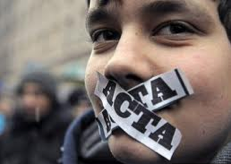
ACTA: The Corporate Usurpation of the Internet

Source: NileBowie

In the wake of a public outcry against internet regulation bills such as SOPA and PIPA, representatives of the EU have signed a new and far more threatening legislation yesterday in Tokyo. Spearheaded by the governments of the United States and Japan and constructed largely in the absence of public awareness, the measures of the Anti-Counterfeiting Trade Agreement (ACTA) dramatically alter current international legal framework, while introducing the first substantial processes of global internet governance. With complete contempt towards the democratic process, the negotiations of the treaty were exclusively held between industry representatives and government officials, while excluding elected representatives and members of the press from their hearings. 

Under the guise of protecting intellectual property rights, the treaty introduces measures that would allow the private sector to enforce sweeping central authority over internet content. The ACTA abolishes all legal oversight involving the removal of content and allows copyright holders to force ISPs to remove material from the internet, something that presently requires a court order. ISPs would then be faced with legal liabilities if they chose not to remove content. Theoretically, personal blogs can be removed for using company logos without permission or simply linking to copy written material; users could be criminalized, barred from accessing the internet and even imprisoned for sharing copyrighted material. Ultimately, these implications would be starkly detrimental toward the internet as a medium for free speech.

Thursday, February 2, 2012

Google to Censor Blogger Blogs on a ‘Per Country Basis’

Source: Threat Level
David Kravets

Google has quietly announced changes to its Blogger free-blogging platform that will enable the blocking of content only in countries where censorship is required.

Twitter announced technology last week addressing the same topic. It said it had acquired the ability to censor tweets in the countries only where it was ordered removed, instead of on an internet-wide basis.

Twitter’s announcement via its blog sparked a huge online backlash. The microblogging service was accused of becoming a censoring agent.

Yet Google’s announcement three weeks ago — buried in a Blogger help page — went unnoticed until it was highlighted by TechDows on Tuesday.

Google wrote Jan. 9 it would begin redirecting Blogger traffic to country-specific URLs, meaning whatever country you’re in, you’ll get that country’s domain for Blogger-hosted blogs.

TechDows reports that this is now happening in India, for example. So when you’re there and click on a Blogger blog, the URL will end .in.

Doing that, Google wrote, means content can be removed “on a per country basis.”

“Migrating to localized domains will allow us to continue promoting free expression and responsible publishing while providing greater flexibility in complying with valid removal requests pursuant to local law,” Google wrote.

Twitter did not announce how its new technology functions, but said Twitter has the ability to remove tweets only in countries where that content was barred.

Wednesday, February 1, 2012

The War to Reign In the Internet Has Begun

Source: Giza Death Star
Dr. Joseph Farrell

Yesterday I blogged about the problems confronting the financial elite seeking to walk the precarious fine line between the breakup of the EU and maintaining it, and implementing middle-class destroying financial policies. The fly in the ointment, of course, is information and its control, i.e., the internet. Once again, The Daily Bell has come forward with a very observant article on this new phase of warfare against the world’s middle class:

Yes, The War for the Internet Has Begun
The problem, as Anthony Wile sees it – and I wholeheartedly concur with his evaluation – is this:
“There is no doubt, in my view, that the elites practiced directed history in the 20th century, setting up wars and economic catastrophes designed to consolidate world government. But in the 21st century, with so many understanding and evaluating the mechanisms of the elites, this is a considerably harder trick to pull off.”
But there is an additional problem for the elite, and I hope you caught it:

Monday, January 30, 2012

Big Brother Internet

Source: Institute for Political Economy
Dr. Paul Craig Roberts

Do you remember the Safe-Cyber instructions they taught you in the mandatory Computer Ed class (operated by the National Institute of Standards and Technology)? First you fire up your Secured Computing Device (SCD) and its hardware token authenticator.

Then you enter the six-digit algorithmically generated password displayed (a new one flashes every 60 seconds) and are asked to supply your biometric identifier. You place your thumb on the built-in fingerprint pad, click, and wait for the Internet connection to begin. But it doesn’t.

Instead, the screen goes black for a second before the dreaded words appear: “Malware has been detected on this SCD. As mandated by federal law, it has been placed in quarantine.” Then the machine shuts down.

This is not just conjecture, but an imminent scenario.

Policies, such as the White House proposed “National Strategy for Trusted Identities in Cyberspace,” which will transform the character, culture and freedom of the Internet, are already in place. The 20 cybersecurity-related bills introduced in the Senate in 2011, and the dozen introduced in the House of Representatives, have wound their way through committees and, according to Senator Harry Reid, are scheduled to be voted on in the first quarter of 2012. Almost all of them, with the blessing of the White House, would make the Department of Homeland Security the overseer of private-sector networks.
  
Considering the apocalyptic rhetoric coming from Washington and the ranks of cybersecurity experts – echoed by media reports that portray every picayune data breach as Armageddon – it would appear that the vulnerability of the Internet has been underplayed for many years.

In the Internet’s start-up decades, both industry and government were committed to establishing an atmosphere of trust that would draw the public into conducting more and more digital business. Though data breaches, theft of trade secrets, identity theft and bank robbery have been a fact of Internet life since its beginnings, there were few laws requiring disclosure. Banks and credit card firms ate their losses as a cost of doing business, and the giant corporations kept mum rather than roil the public. Recently, the pendulum has swung in the other direction and a raucous alarm has been sounded regarding the great danger posed by the Internet.

Sunday, January 29, 2012

Beyond SOPA: The Past, Present and Future of Internet Censorship

Source: Corbett Report and Global Research
James Corbett

TRANSCRIPT AND SOURCES:
When legislators in the US abandoned their support of SOPA and PIPA in the wake of mass popular protest earlier this month, many of those who had been mobilized by the legislation–which would have granted the US government almost total power to block access to foreign websites accused of so much as linking to copyrighted material–did not have long to enjoy their “victory.” The very next day the New Zealand police swooped in to the million-dollar estate of MegaUpload.com founder Kim Dotcom, arresting him and three others at the US government’s request for alleged racketeering, copyright infringement and money laundering. The Department of Justice is now seeking the MegaUpload CEO’s extradition to the US.

ACTA is Worse than SOPA, Here's What You Need to Know

Source: Natural News

As a warrior for Internet freedom, you helped defeat the Stop Online Piracy Act, or SOPA by supporting Web black outs by sites like Wikipedia and by contacting your lawmaker to voice your displeasure. So loud was your voice that even the president of the United States sided with you in opposing it.

But don't take a deep sigh of relief because, after all, we're talking about a merger of Washington, D.C., and Hollywood here, as well as global interests. After the motion picture industry, its subsidiaries and all "interested parties" have spent nearly $150 million lobbying for some sort of Internet-centric "anti-piracy" bill, you should have known the powers that be would return.

And they have, only this time they are pushing something far more onerous: ACTA, or the Anti-Counterfeiting Trade Agreement.

"Although the proposed treaty's title might suggest that the agreement deals only with counterfeit physical goods (such as medicines) what little information has been made available publicly by negotiating governments about the content of the treaty makes it clear that it will have a far broader scope and in particular will deal with new tools targeting 'Internet distribution and information technology'", says an assessment of ACTA by the watchdogs at the Electronic Freedom Foundation.

"ACTA has several features that raise significant potential concerns for consumers' privacy and civil liberties for innovation and the free flow of information on the Internet [regarding] legitimate commerce and for developing countries' ability to choose policy options that best suit their domestic priorities and level of economic development," says EFF's assessment.

As is usually the case with dubious, rights-stripping legislation, ACTA - which Forbes.com reports was signed by the U.S. in 2011 and has already been sanctioned as well by Japan, Switzerland and many European Union nations - has largely been negotiated in the shadows and, thus, has largely been devoid of scrutiny... until now.

While the Obama administration was shying away from SOPA, it has been aggressively pursuing ACTA (full disclosure: the process was started under the Bush administration). Critics say it is much more far-reaching than SOPA, bypassing "the sovereign laws of participating nations" and "forcing ISP's across the globe to act as internet police," Forbes said.

Friday, January 27, 2012

Dan Dicks Interviews James Corbett

Source: Press For Truth
Dan Dicks

James Corbett is an independent journalist and a true champion of alternative media. He has informed and influenced millions of people through his youtube channel and website. In this interview we discuss how James got started and how his hard work and dedication has brought him to the point of doing this work full time. James also gives us his insight on the recent situation involving the PIPA and SOPA bills and the reaction by Anonymous. Considering James was my first subscriber at Press For Truth TV I thought it would be fitting for him to be my first guest.

European Parliament Official In Charge Of ACTA Quits, And Denounces The 'Masquerade' Behind ACTA

Source: Tech Dirt
Mike Masnick

This is interesting. Kader Arif, the "rapporteur" for ACTA, has quit that role in disgust over the process behind getting the EU to sign onto ACTA. A rapporteur is a person "appointed by a deliberative body to investigate an issue." However, it appears his investigation of ACTA didn't make him very pleased:
I want to denounce in the strongest possible manner the entire process that led to the signature of this agreement: no inclusion of civil society organisations, a lack of transparency from the start of the negotiations, repeated postponing of the signature of the text without an explanation being ever given, exclusion of the EU Parliament's demands that were expressed on several occasions in our assembly.

As rapporteur of this text, I have faced never-before-seen manoeuvres from the right wing of this Parliament to impose a rushed calendar before public opinion could be alerted, thus depriving the Parliament of its right to expression and of the tools at its disposal to convey citizens' legitimate demands.”

Everyone knows the ACTA agreement is problematic, whether it is its impact on civil liberties, the way it makes Internet access providers liable, its consequences on generic drugs manufacturing, or how little protection it gives to our geographical indications.

This agreement might have major consequences on citizens' lives, and still, everything is being done to prevent the European Parliament from having its say in this matter. That is why today, as I release this report for which I was in charge, I want to send a strong signal and alert the public opinion about this unacceptable situation. I will not take part in this masquerade.
Pretty rare to find such direct honesty in political circles. That's quite a direct and clear condemnation of the entire process. In terms of process, it will be interesting to see if this has an impact. While the EU did sign on to ACTA today, it still needs to be ratified by the European Parliament (more on that in a little while). Having Arif quit makes a pretty big statement, and hopefully makes it easier for Parliament Members to speak out loudly against ACTA... Still, this is an uphill battle. The supporters of ACTA have been working to get ACTA approved for years. To them, this is basically a done deal.

Wednesday, January 25, 2012

Google Announces Privacy Changes Across Products; Users Can’t Opt Out

Source: Washington Post
Cecilia Kang

Google will soon know far more about who you are and what you do on the Web.

The Web giant announced Tuesday that it plans to follow the activities of users across nearly all of its ubiquitous sites, including YouTube, Gmail and its leading search engine.

Google has already been collecting some of this information. But for the first time, it is combining data across its Web sites to stitch together a fuller portrait of users.

Consumers won’t be able to opt out of the changes, which take effect March 1. And experts say the policy shift will invite greater scrutiny from federal regulators of the company’s privacy and competitive practices.

The move will help Google better tailor its ads to people’s tastes. If someone watches an NBA clip online and lives in Washington, the firm could advertise Washington Wizards tickets in that person’s Gmail account.

Consumers could also benefit, the company said. When someone is searching for the word “jaguar,” Google would have a better idea of whether the person was interested in the animal or the car. Or the firm might suggest e-mailing contacts in New York when it learns you are planning a trip there.

But consumer advocates say the new policy might upset people who never expected their information would be shared across so many different Web sites.

A user signing up for Gmail, for instance, might never have imagined that the content of his or her messages could affect the experience on seemingly unrelated Web sites such as YouTube. 

“Google’s new privacy announcement is frustrating and a little frightening,” said Common Sense Media chief executive James Steyer. “Even if the company believes that tracking users across all platforms improves their services, consumers should still have the option to opt out — especially the kids and teens who are avid users of YouTube, Gmail and Google Search.”

Tuesday, January 24, 2012

SOPA and PIPA Fully Alive - And a New Bill Joins Them

Source: Activist Post
Heather Callaghan

Many of us breathed a sigh of relief when an overwhelming amount of Americans banned together and voiced their opposition to Congress over both the Stop Online Piracy Act, and Protect Intellectual Property Act.

Sites that dimmed the screen for a day or two have gone back to normal -- Facebook users have swapped their anti-SOPA images for their previous profile pictures.

We may have even believed that the postponement of the vote originally scheduled for January 24th was some sort of white flag of capitulation. But that is certainly not the MO of most lawmakers.

While the outcry did get the attention of Congress, they are simply returning unflinchingly back to the drawing board to wait out our attention spans. Articles whirled that SOPA was dead and the bill was pulled when the bill's sponsor Lamar Smith said in a statement that there would be no further action “until there is wider agreement on a solution.”

Lamar isn't really listening. “It is clear that we need to revisit the approach on how best to address the problem of foreign thieves that steal and sell American inventions and products.”

Actually, SOPA is set to be reformulated in February. PIPA will be revisited with possible amendments in the coming weeks. Case in point, all is still open and possible -- nothing is dead, pulled, or cancelled. If that wasn't enough to keep us on our toes, a new, similar bill has surfaced.

Déjà Vu in the form of OPEN -- The New Anti-Piracy Bill

As an alternative to SOPA-PIPA, Representative Darrell Issa (CA-R), and 24 co-sponsors introduced the Online Protection and Enforcement of Digital Trade (OPEN) H.R. 3782 on Wednesday, during the Internet blackout.

Monday, January 23, 2012

Ron Paul: Preserve the Internet, Down with SOPA

Source: Ron Paul

The Congressman addresses the ongoing war over freedom of the internet.

Friday, January 20, 2012

Escalating Cyber War Spells Trouble for Internet Freedom

Source: Activist Post
Eric Blair

The cyber war escalated to a whole new level yesterday. The U.S. government shut down the popular website MegaUpload at the behest of corporate interests. The Feds accused MegaUpload of stealing $500 million in potential lost revenue from copyright holders.

Almost immediately, the hacktivist group Anonymous retaliated by launching massive DDoS attacks on several websites including the US Copyright Office, Department of Justice, FBI.gov, Universal Music Group, Music Picture Association of America, and the Recording Industry Association of America. The attack called “Operation MegaUpload” is also said to be targeting Whitehouse.gov.

Many Internet freedom and privacy activists are cheering Anonymous’ assault against the U.S. Government and the corporate interests that control it. But I’m getting the eerie feeling that Anonymous is playing right into the hands of those who wish to control and censor the Internet.

First, I must state unequivocally that the U.S. government and the copyright holders are clearly the aggressors in this war. Their actions violate current copyright laws where the content providers must prove damages in the court of law before they can sabotage and ransack a business they accuse of stealing. Even though a grand jury supposedly indicted MegaUpload, it’s nearly impossible for them to prove “potential lost revenue” since those engaged in file sharing cannot automatically be considered lost customers.  

Because of this conundrum, copyright holders instead lobbied the government to change the laws to legalize this form of censorship through blunt force and without due process. It seems that since the sought-after legislation, SOPA, has been recently shelved due to universal protest, the State was compelled to act above the law to destroy those sharing information on the Web.

Even more suspicious is that some of the chief copyright holders pushing for these new guilty-until-proven-innocent laws were the ones who developed, promoted, and profited from file sharing in the first place. Again, it’s all beginning to feel like a set-up designed to justify Internet censorship, which is clearly the end game for the powers that be.

Thus the cyber war seems to be heading in the same direction as all literal and figurative wars do. Let’s remember that the public never wins in war. War always justifies atrocities against freedom and proves devastating for infrastructure. Fighting fire with fire very rarely results in anything but destruction. And it’s far easier to destroy something than to create a solution.

LinkWithin

Related Posts Plugin for WordPress, Blogger...